Metal Gate Welding Repair in Lexington, KY | Structural welding repair of broken or cracked gate frames
We are Lexington KY Metal Gates, and metal Gate Welding Repair in Lexington and the Bluegrass is a job we know by the soil as much as by the gate. Here is how we do it and what usually goes wrong when someone else does not take the ground seriously. We would rather explain the whole picture up front than have you discover the gaps after the concrete has already cured.
Metal Gate Welding Repair in and around Lexington KY
We get calls about gates that were installed by three different kinds of people: fencing companies that do not do heavy steel, general handymen, and, more often than you would think, the property owner and a bag of concrete. Each leaves a different signature of what eventually breaks.
Repairs are one part of the work we do at Lexington KY Metal Gates.
Not every gate needs automation. If the opening sees light foot and vehicle traffic, a well-built manual gate with good hardware can be the more sensible choice.
How We Build It, and How It Usually Gets Built
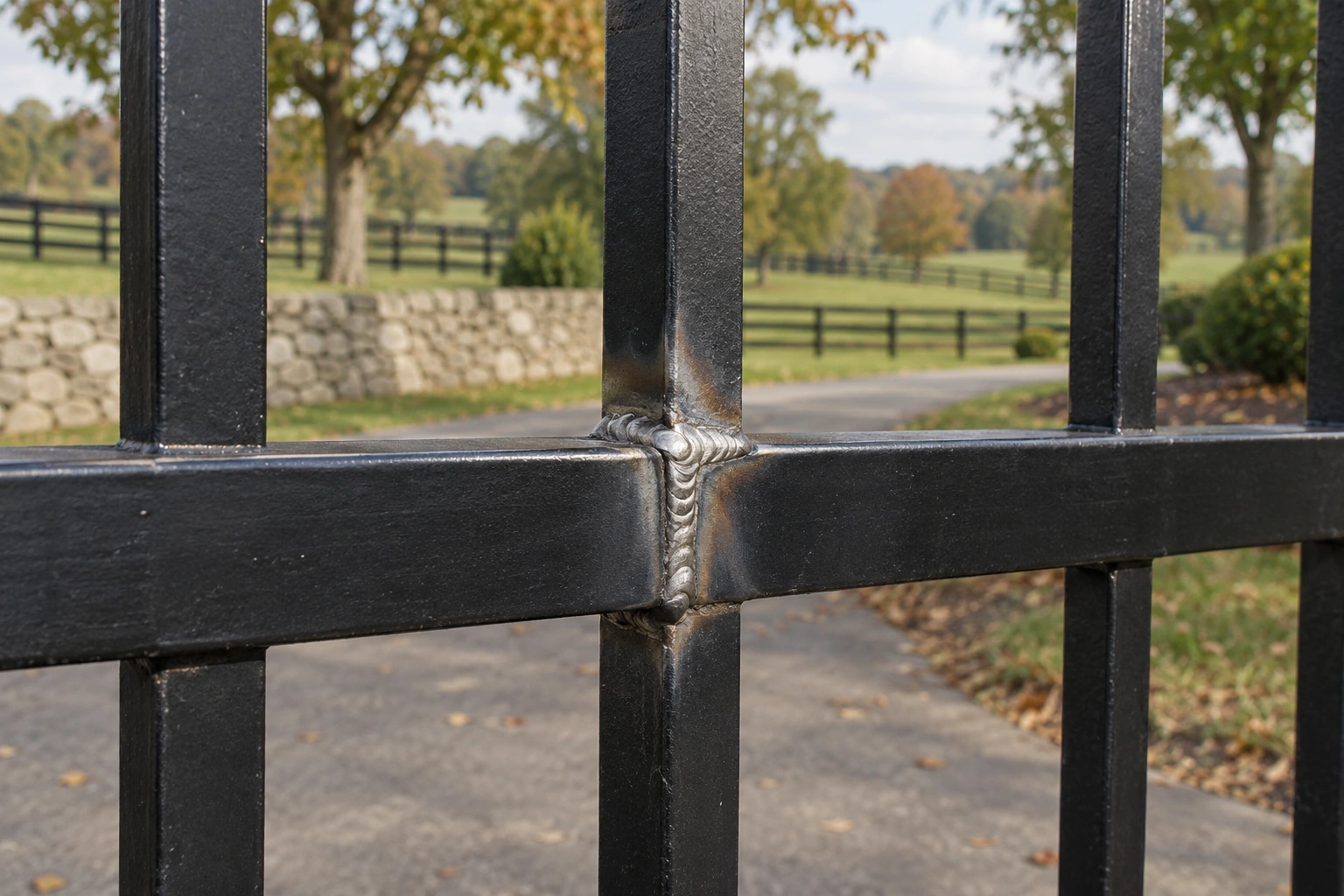
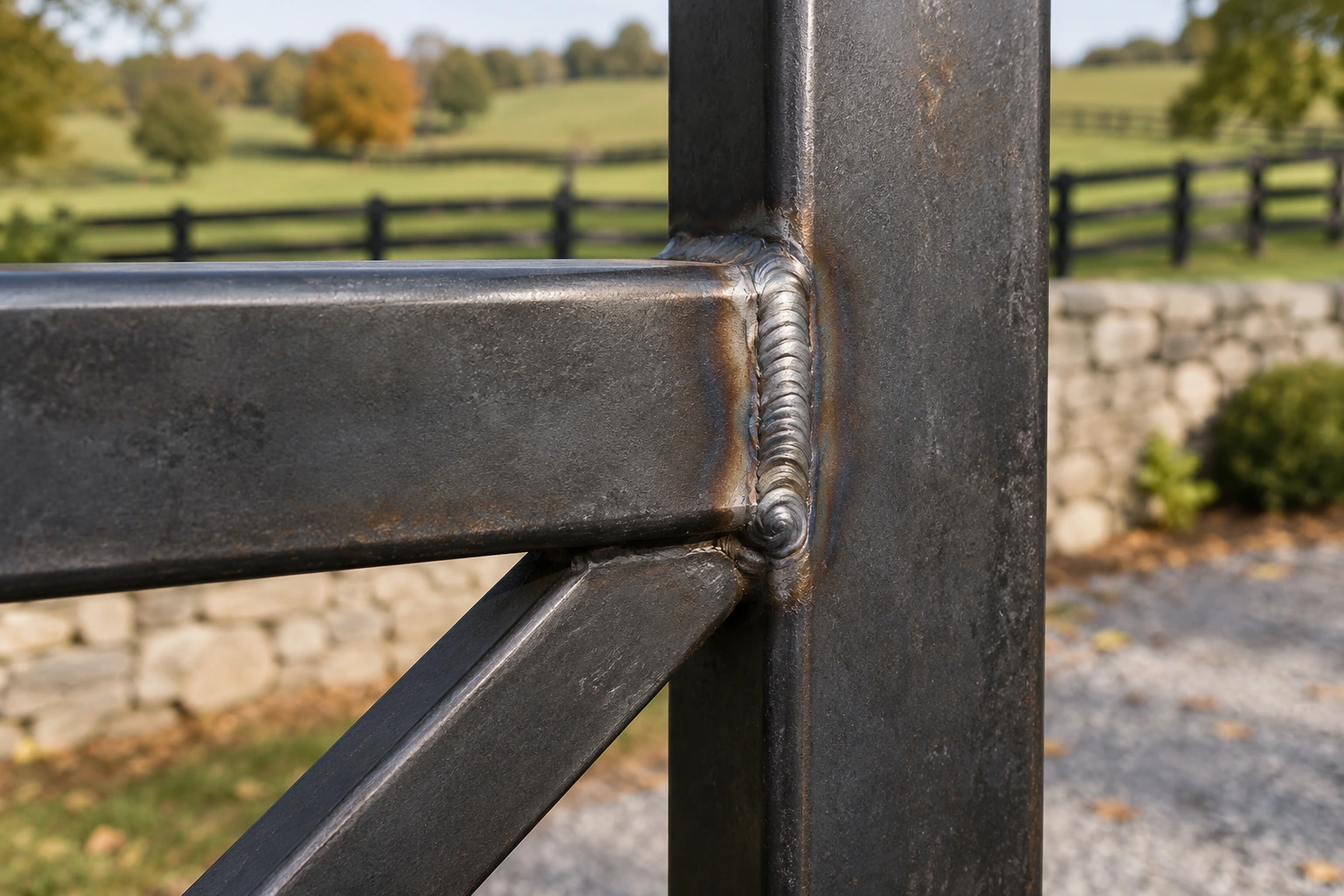
A cracked weld at a picket joint is a structural failure, not a cosmetic one. We grind back to clean metal and rebuild the joint rather than bridging over rust with new weld.
What This Job Actually Involves
- A root-cause diagnosis before any part gets replaced
- Hardware matched to the gate's actual weight, not whatever fits the existing holes
- A written explanation of what failed and why, in plain language
- A repair built to outlast a patch, even where a patch would be cheaper today
Before We Arrive
- Note when the problem started and whether it followed a specific event, like a storm or a vehicle strike
- Avoid forcing a stuck or misaligned gate, which can turn a repair into a replacement
- Have any warranty paperwork from the original installer on hand if you have it
- Let us know if the gate is automated so we can check the operator alongside the structure
Our Four-Step Process
Diagnosis
We identify the actual root cause, not just the visible symptom.
Scope confirmation
We explain what is failing and why, and give you a repair or replacement recommendation in plain language.
Repair
Hardware, welds, footer, or finish work is carried out to the same standard as new installation.
Final test
The gate is tested through a full cycle, automated or manual, before we consider the job done.
What Goes Wrong
| Symptom | Likely Cause | What We Do |
|---|---|---|
| Gate has been dragging on the ground for months | Left untreated, this usually means the hinge, the post, or both are already compromised | Diagnose which one failed first rather than just re-hanging the gate on the same hardware |
| Fresh paint is already bubbling after one season | Paint applied over rust or without proper surface prep, common with a quick touch-up job | Media blast to bare metal, zinc-rich primer, then a baked powder coat finish |
| Automated gate worked fine until this week's cold snap | Battery backup degraded or hydraulic operator fluid thickened in low temperatures, both common in an unmaintained system | Test the backup power and operator response under load before assuming it is a motor failure |
What Drives the Cost
We do not publish flat prices because two gates that look alike on paper can be very different jobs once we are on site. These are the factors that actually move the number.
Gate size and material
A wider or heavier leaf needs a larger footer, heavier hardware, and in some cases a stronger operator, all of which affect the job.
Site conditions
Shallow limestone, an existing failed footer that has to be removed, or a slope at the entrance all add time that a flat, clear site would not need.
Automation and access technology
A manual gate is a different scope than a gate with an operator, sensors, a keypad, and an intercom wired together.
Usual vs. Us
How it's often done
- A quick patch on whatever is visibly broken, without checking what caused it
- Hardware reused even when it is already worn past spec
- A repair that lasts one season and gets called back out
How we do it
- A diagnosis of the root cause before anything gets replaced
- Hardware matched to the gate's real weight, not reused out of convenience
- A repair built to outlast a patch job, explained to you in plain terms
Specification Plate
- Diagnosis
- Root-cause check before any part is replaced
- Hardware
- Matched to the gate's actual weight, not reused out of convenience
- Finish repair
- Media blasting to bare metal, zinc-rich primer, baked powder coat
- Structural repair
- Ground-back welds rebuilt to full strength, not bridged over rust
Everything We Build in the Bluegrass
Hinge failure
A worn hinge pin lets the gate leaf drop a fraction of an inch at a time. By the time it is visible to the eye, the post has usually been carrying an off-axis load for months.
Motor and control board issues
Most operator calls we get are not a dead motor, they are a control board that has lost its limit settings or a capacitor that is failing under load. We test before we replace.
Welding repair
A cracked weld at a picket joint is a structural failure, not a cosmetic one. We grind back to clean metal and rebuild the joint rather than bridging over rust with new weld.
Rust and refinishing
Surface rust on wrought iron is a coating failure, not a metal failure, in most cases. Media blasting back to bare metal and a zinc-rich primer under a proper powder coat stops the clock instead of just hiding it for a season.
Frequently Asked Questions
Cost depends on gate size, material, site conditions, and whether the gate is automated, so we do not quote a figure without seeing the opening. Call Lexington and the Bluegrass area jobs in for a free, no-obligation quote and we will walk you through what drives the number for your specific site.
A straightforward manual gate is often a one to two day job once the footer concrete has cured enough to bear load. Adding automation, access control, or unusual site conditions like shallow limestone extends that. We will give you a real schedule after the site visit, not a generic estimate.
You do not need to be present for the full job, but we do ask that someone is available at the start to confirm gate location, swing or slide direction, and any property lines or utilities we should know about.
Yes. We walk the site, look at what we are working with, and give you a written quote with no obligation and no pressure to sign that day.
Often, yes. A worn hinge, a failed footer, or a cracked weld can usually be repaired on the existing gate. We will tell you plainly if the structure is too far gone and replacement is the more honest recommendation.
If the steel frame itself is sound and the problem is hardware, alignment, finish, or the footer, repair is usually the right call. If the frame is cracked in multiple places or badly corroded through, we will say so rather than repair something that will fail again.
It depends on the jurisdiction and the height and location of the gate. Fayette County caps front yard fences and gates at 4 feet and side or rear yard structures at 8 feet, with different rules for gates on a public right-of-way. We check the applicable code for your address before we build so there are no surprises at inspection.
Adding a gate, especially an automated one with safety sensors, is generally viewed favorably by insurers, though you should confirm with your specific carrier since policies vary.
Yes, though concrete cure times run longer in cold weather and we plan the schedule around that rather than rushing a footer that has not properly set.
Talk to Us About Metal Gate Welding Repair
Free, no-obligation quotes for metal gate welding repair across Lexington and the Bluegrass.
Call 859-800-6978